How To Make simple coir dust meter


This is a water sensitive circuit.We can use this circuit to measure whether coir dust is wet or dry.

How to operate:-

First of all switch on your multimeter and switch it to measure the voltage next get the handle and pull it in to the sack of coir dust ( That means A and B must go in to the sack) then read the meter.

Before stating to use this circuit get the value of dry coir and the wet coir then note down them. If a sack of coir get the nearest value you can send them to the factory to make crafts.

( If you like you can remove the LED)


Read More

Migrate from IPv4 to IPv6 very soon


The World Wide Web is running out of space. But in the virtual world, there's a quick fix for this: an upgrade that shifts the Web, or its addressing system, to a brand new protocol.

While this silent upgrade doesn't change the way you navigate the Web, or how you type in your Web addresses in your browser, at the back-end, it means that the Internet is now truly a near-infinite resource. The new Internet addressing system or standard, which has been waiting in the wings for over a decade, now uses a new addressing system (128-bit instead of the 32-bit), thus expanding the number of available unique IP addresses from around 4.3 billion to over 300 undecillion (three times the exponential of trillion).

This week, major stakeholders in the Internet market (service providers, operators and networking firms) across the globe participated in the World IPv6 launch, where they made public IPv6 support for their customers. Hardware-wise, many of the networking majors have been providing out-of-the-box support for IPv6 for some time now. However, it is estimated that barely 1 per cent of the total Internet runs on IPv6 today. In India, this figure is almost nil, because even those with IPv6 addresses complain that it is almost impossible to navigate the Web as very few service providers have made the shift.

IPv4, the standard that precedes this brand new one that everyone's talking about, has been around for over three decades now. These standards are important for they are the reason that computing devices — irrespective of type, geographic location or mode — are able to interact with each other.

IPv4 allowed for a certain number of unique IP addresses, but since the early eighties, the population has expanded and many more have logged on or seek to log on to the World Wide Web.

IP addresses, we all know by now, are important because they are what identify your device, and allow for packets of information to move to or from your device.

NUMBERS

While IPv4 is a simple no-frills protocol, this new version has learnt from the experience of the Internet and has geared itself to address various challenges.

So besides being roomier, other benefits of IPv6 include inbuilt security protocols (called IPSec) in its network layers, more efficient routing and, therefore, better speed, and that it is adaptable and expandable. Security is a big plus here, because this protocol encrypts data packets and constantly monitors the traffic, providing high levels of protection to regular Internet traffic.

MIGRATION NEEDS

What is the new hardware that this new protocol requires? Like any new protocol, this mandates that devices be made IPv6 complaint. Operating systems, routers and modems and even websites, need to step up to make adoption possible. A simple proposed technological solution for this migration is to go for dual stack IP addresses (where both systems can coexist) or tunnelling IPv6 over IPv4; though the former solution is said to be more preferred.

The technical challenge with IPv6 deployment has to do with the fact that this protocol is not backward compatible (that is, devices that can read and recognise IPv4 addresses cannot read those written in the new protocol). This is part of the reason why Internet service providers have gone slow on IPv6 adoption. However, given that we're running out of addresses for our devices, the migration is inevitable.

This doesn't require an entire overhaul, a simple deployment of translating devices — a process that is indeed expensive — will do.

India scenario IPv6 adoption is critical in the country, as it is in the developing world where the Internet growth story is still unfolding. According to official statistics, India has 35 million IPv4 addresses against a user base of around 360 million.

Indeed, the Internet penetration levels are an estimate 10 to 12 per cent, which means that as technology becomes more accessible, millions will seek to log on to the Internet.

This isn't just restricted to traditional computing devices that come to mind such as desktops or tablets but also devices such as televisions or electric equipment that will log on to ‘smart' homes, perhaps in the next decade. Each of these need an IP address to talk to the network, and these addresses will have no choice but to follow the new available address system.

On World IPv6 launch day, the Indian government also announced its plan to migrate all websites to IPv6 by December 2012 (currently 27 websites have effectively completed the migration to a dual-stack platform). It described this transition as “complex, mammoth and a long-term exercise”.

However, a rewarding one that opens up possibilities of applications across sectors including data centres, smart grids, IPTV and rural healthcare management. For at least a year now, the Department of Telecommunication has held workshops for state agencies, public sector units and State governments on IPv6 migration.

The government had also released a road map for stakeholders to complete the migration and task forces have been set up to monitor the shift.

COST ISSUES

The only way to facilitate this migration, technology-wise, is to dual-stack the current networks to allow for existing IPv4 addresses to continue, while making room for more addresses. This involves hardware costs and manpower expenditure by ISPs.

Tarun Dua, Chief Technology Officer at E2E Networks Private Ltd., says that to ensure quick migration, the government will have to tweak policies to include a sophisticated market-friendly approach or even provide an initial government impetus to players by using the universal service obligation fund. He suggests that offering a commercial incentive for ISPs and non-ISP players in the market to make the transition by allowing or opening up trading of IPv4 addresses may be another creative solution.
Read More

Facebook's Mark Zuckerberg married Now


This photo provided by Facebook shows Facebook founder and CEO Mark Zuckerberg and Priscilla Chan at their wedding ceremony in Palo Alto, Calif., Saturday, May 19, 2012. Zuckerberg updated his status to "married" on Saturday. The ceremony took place in Zuckerberg's backyard before fewer than 100 guests, who all thought they were there to celebrate Chan's graduation. (AP Photo/Facebook, Allyson Magda Photography)

This photo provided by Facebook shows Facebook founder and CEO Mark Zuckerberg and Priscilla Chan at their wedding ceremony in Palo Alto, Calif., Saturday, May 19, 2012. Zuckerberg updated his status

Facebook                          Facebook                        Facebook                         Facebook
Read More

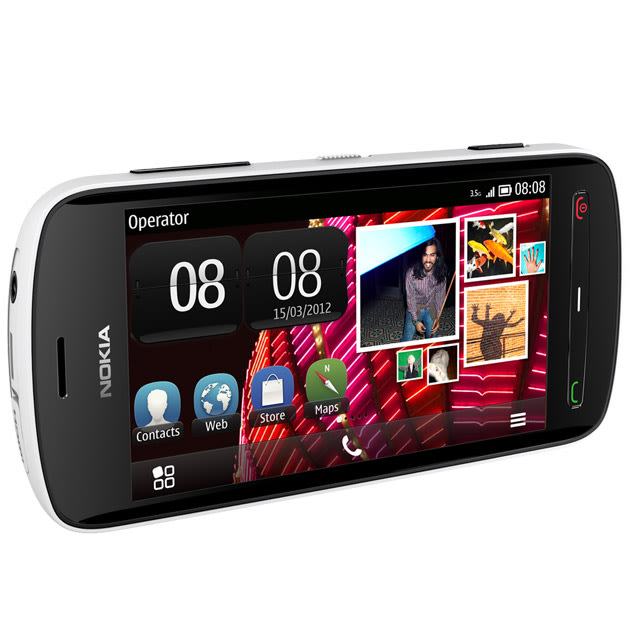
Nokia launches 41-MP camera smartphone : 808 Pureview


At the Mobile World Congress in Barcelona, Nokia announced the 808 Pureview, a flagship Symbian device with a 41-Megapixel camera. In addition to superior still imaging technology, the Nokia 808 PureView, also includes full HD 1080p video recording and playback with 4X loss less zoom and the world's first use of Nokia Rich Recording. It  is expected to launch in Europe in May. At 41mp, the phone is able to shoot images that Nokia claims can be printed at “poster size”. Files, however, condense four or five pixels into one, and Nokia claims they are smaller than equivalent products from rivals. A Carl Zeiss lens shoots in continuous focus HD video, at 1080p.


The 808 uses the Symbian platform,with excellent imaging technology
The device uses a 1.3GHz processor, comes with 16GB of storage and runs a 4" screen at 360 x 640, which is below HD resolution.
Nokia also announced that it was expanding its range of Windows Phone devices for Europe.

Nokia 808 Pureview                              Nokia Smart Phone                    Nokia 808 Pureview

Read More

Free SEO Services for Websites with Rank Pay

SEO services are now free for small business websites that are unable to rank higher after utilizing http://www.rankpay.com for search engine optimization. The SEO experts at Rank Pay have developed a unique formula that is based on actual results received compared with the traditional long-term contract payments for SEO services.

SEO services are one useful tool that a small business can use to help increase search engine success rates and click-through percentages. The search engine battles have increased over the past 5 years as hundreds of new business startups and entrepreneurs have launched competitive websites. http://www.rankpay.com, a results based SEO company, has created a unique way for small business owners to reduce the cost of SEO services for a website. Companies receive an online evaluation of keywords for a target URL and are provided with the approximate cost to improve the current positioning in search engines. A company that does not rank in 44 days to a respectably higher position pays nothing for Rank Pay SEO services.

A new trend in website marketing and promotion is to build an online brand around a company, product or service. As more people use the Internet for e-commerce, branding is becoming an important part of conducting business online. Internet marketing has largely been built around creating multiple websites to promote products or services for one or more companies. A search engine optimization company that has experts that know all sides of Internet marketing and promotion can usually offer the best services.

“We know how difficult it can be to promote one website with all of the recent Google changes,” said Brian Hansen, SEO Specialist and Co-Founder of http://www.maketersblackbook.com. “We own hundreds of websites and know the struggles of getting them to rank in search engines,” added Hansen. A results based SEO strategy is one way that a company can reduce online marketing and e-commerce expenses.

As Internet search engines begin to put extra focus on high quality content, websites that are able to create and market a brand that is connected to this content could improve results. The emerging presence of online video and social media marketing is one reminder that a business competing in the 21st century must learn to adapt and try new things to remain competitive online. The process of search engine optimization continues to evolve and many new changes could be on the horizon. The risk-free SEO services strategy provided by http://www.rankpay.com is one solution that a website owner can try to manipulate existing search engine placement in an effort to get to the first page of Yahoo, Google or Bing.

About Rank Pay

Rank Pay provides results based SEO services to small business owners and individuals that want to improve search engine optimization success rates. Traditional SEO companies rely on long-term commitments and require upfront fees regardless of search engine rankings performance. Rank Pay was started in 2006 and has built a strong team of SEO experts that get proven results for clients. As search engines update search formulas and algorithms, Rank Pay’s clients are expected to continue to achieve growth and better than expected results throughout 2012.

For the original version on PRWeb visit: http://www.prweb.com/releases/prwebseo-services/seo-expert-rank-pay/prweb9583271.htm
Read More

8 million leaked passwords connected to LinkedIn, dating website


8 million leaked passwords connected to LinkedIn, dating website


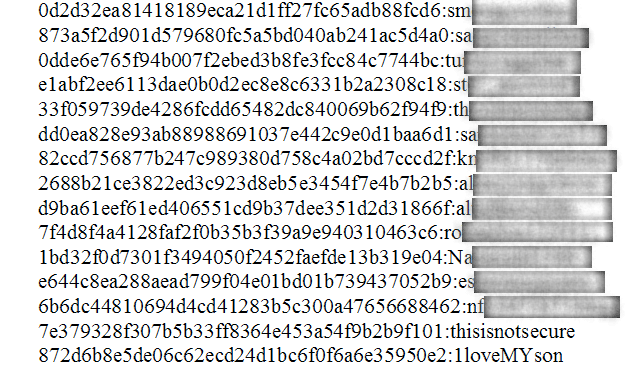
A partial list of the 6.5 million passwords leaked by someone identified as dwdm. The list contains strong passwords that were unique to LinkedIn, leading to speculation that's were the passwords originated.

An unknown hacker has posted more than 8 million cryptographic hashes to the Internet that appear to belong to users of LinkedIn and a separate, popular dating website.

The massive dumps over the past three days came in postings to user forums dedicated to password cracking at insidepro.com. The smaller of the two lists contains about 1.5 million unsalted MD5 hashes. Based on the plaintext passwords that have been cracked so far, they appear to belong to users of a popular dating website.


A partial list of the 6.5 million passwords leaked by someone identified as dwdm. The list contains strong passwords that were unique to LinkedIn, leading to speculation that's were the passwords originated.
Read More

LinkedIn Users: Change Password Now


Attackers appear to have obtained--and may have already decrypted--at least 6.5 million LinkedIn passwords.All users of the LinkedIn social network should immediately change their password.
Security experts began broadcasting that warning Wednesday after reports emerged that nearly 6.5 million LinkedIn password hashes--encrypted using SHA1, but not salted--had been posted to a Russian hacking forum on Monday, together with a request to help decrypt them.
Hackers have already reported breaking 163,267 of the passwords, reported Norwegian news outlet Dagen IT, which Wednesday broke the news of the LinkedIn password breach.
LinkedIn confirmed that it's investigating the potential password breach. "Our team is currently looking into reports of stolen passwords. Stay tuned for more," read a Wednesday tweet from LinkedIn News.
[ Read about how hackers accessed a Romney Webmail account. See Romney Campaign Investigates Hotmail Account Hack. ]

What should LinkedIn users do? 
First change your LinkedIn password.
Then prepare for scam emails about Linkedin password changes, linking to phishing sites. Will happen," said Mikko Hypponen, chief research officer at F-Secure, via Twitter.
Security expert Per Thorsheim tweeted that he'd reviewed the uploaded password hashes and recovered at least 300,000 of them. "The number of [occurrences] of 'linkedin' in those passwords leave little doubt about the origin. Change password NOW!" Meanwhile, a post from the Security Ninja website's Twitter feed noted that "after getting the list of @linkedin hashes and hashing my old pwd with no salt there is a match for the hash in the list." Accordingly, it said that it was "best to assume the worst and change your password."
Evidently, LinkedIn didn't salt its passwords--a practice recommended by security experts that involves adding a unique string to each password before encrypting it. Had the passwords been salted, it would have made them more difficult for attackers to reverse the SHA1 password hashes. In fact, attackers may have already decrypted the passwords, and they may also have users' passwords and email addresses. "Although the data which has been released so far does not include associated email addresses, it is reasonable to assume that such information may be in the hands of the criminals," said Graham Cluley, senior technology consultant at Sophos, in a blog post.
The Computer Emergency Response Team of Finland (CERT-FI) Wednesday warned that many more than the 6,458,020 uploaded password hashes are likely to have been obtained by attackers. "Not all LinkedIn passwords have been published, but it is likely that an attacker is in possession of the rest of the passwords," it said.
According to LinkedIn, as of March 31, 2012, it had 161 million members.
CERT-FI also advised anyone who had reused their LinkedIn password on another site to immediately change it there as well, since it will be at risk of being hacked by anyone who downloads and reverses the uploaded LinkedIn password hashes.
Read More